
Imperial Engineered Oak™ Installation Guide
Our Engineered Timber Flooring is designed for long-term performance, stability and premium aesthetics.
Approved Installation Methods
-
Direct Stick (Glue-Down) – Recommended for maximum stability.
-
Floating Floor – Where permitted by product specifications.
-
Herringbone & Chevron: Direct Stick Full Glue-Down installation only.
All installations must comply with this guide and relevant Australian Standards. Failure to follow requirements may void the product warranty.


ENGINEERED TIMBER FLOORING INSTALLATION GUIDE
Imperial Flooring Australia®
Imperial Flooring Australia® Engineered Timber Flooring is designed for exceptional performance, structural stability, and long-term aesthetic appeal. Installation may be completed using one of the following approved methods:
Approved Installation Methods
-
Direct Stick (Glue-Down Installation) – Recommended for maximum stability and long-term performance.
-
Floating Floor System – Suitable where subfloor conditions permit and in accordance with product specifications.
Important: Herringbone and Chevron flooring must be installed using the Direct Stick (Full Glue-Down) method only.
Installation must be carried out in accordance with this guide and relevant Australian Standards. Failure to follow these requirements may void the product warranty.
General Installation Requirements
Fixed Structures
Direct Stick Installations
Heavy fixed items such as kitchen islands, cabinetry and built-in joinery may be installed over the flooring once the adhesive has fully cured.
Floating Installations
Flooring must be installed around all heavy fixed objects to allow for natural expansion and contraction. Floating floors must never be mechanically fixed or otherwise restricted.
Material Allowance
To ensure sufficient material is available for installation:
-
Engineered Timber Plank Flooring: Allow a minimum of 10% extra material.
-
Herringbone & Chevron Flooring: Allow 15–20% extra material due to increased cutting, waste and pattern alignment.
DIRECT STICK (GLUE-DOWN) INSTALLATION PROCEDURE
1. Tools & Materials Required
-
Imperial Flooring Australia® Engineered Timber Flooring
-
Bostik Ultraset HP Timber Flooring Adhesive (or equivalent approved adhesive)
-
4.8mm V-Notch Trowel (as specified by adhesive manufacturer)
-
Wakol PU 280 Moisture Barrier (where required)
-
Tape Measure
-
Mitre Saw and Table Saw
-
Imperial Pull Bar
-
Multi-tool or Jamb Saw
-
Spacers or Wedges
-
Vacuum or Broom
-
Cleaning Wipes
-
Floor Levelling Compounds and Preparation Equipment (where required)
Adhesives and moisture barriers must always be used strictly in accordance with the manufacturer's instructions.
2. Subfloor Preparation
Proper subfloor preparation is essential for a successful installation.
The subfloor must be:
-
Structurally sound
-
Dry and moisture compliant
-
Clean and free from dust, oil, grease and contaminants
-
Flat within Australian Standard tolerances
Flatness Tolerance
Subfloor deviation must not exceed 3mm over 3 metres.
Where necessary:
-
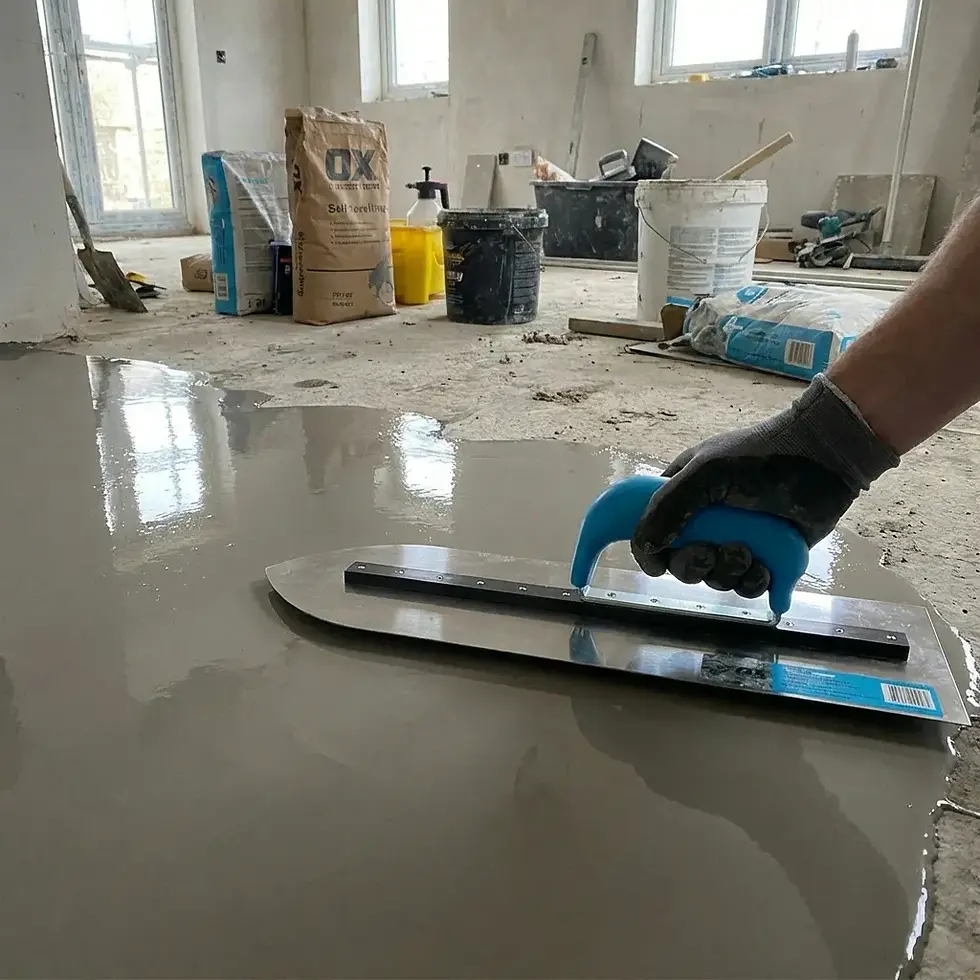
Low areas must be corrected using approved floor levelling compounds.
-
High spots must be mechanically ground.
The subfloor must not be washed or left wet immediately prior to installation.
Timber or Particleboard Subfloors
-
Lightly sand to remove coatings or contaminants.
-
Level peaking joints.
-
Remove all construction debris and residues.
Moisture Protection
For ground-level concrete slabs or moisture-prone substrates: Apply Wakol PU 280 (or an equivalent approved moisture barrier) in accordance with the manufacturer's specifications before adhesive application. Moisture testing must comply with Australian Standards for moisture-prone subfloors.
Underfloor Heating
Imperial Flooring Australia® Engineered Timber Flooring is compatible only with in-slab hydronic underfloor heating systems.
-
Maximum floor surface temperature: 26°C
-
Electric underfloor heating systems void warranty.
3. Undercutting Door Frames
Door jambs and architraves must be undercut to allow flooring to slide beneath without restriction.
-
Use an inverted flooring plank as a height guide.
-
Cut using a multi-tool or jamb saw.
This provides the correct expansion allowance and delivers a professional finish.
4. Layout & Expansion
Before installation:
-
Select a starting wall.
-
Establish a straight reference line using a chalk line or laser.
-
Maintain a minimum 8mm expansion gap around all perimeter walls and fixed vertical structures.
-
Ensure the first row is perfectly straight, as it determines the alignment of the entire installation.
Installations Exceeding 20 Metres
For continuous runs over 20 metres:
-
Increase the expansion gap by 1mm for every metre beyond 20 metres, or
-
Install suitable expansion breaks at doorways or designated transition points.
Expansion gaps must remain unobstructed at all times.
5. Adhesive Application
-
Apply adhesive using a 4.8mm V-Notch Trowel held at approximately 45°.
-
Spread adhesive only in manageable sections (approximately 300mm wide).
-
Do not spread adhesive across the entire floor at once.
-
Follow the adhesive manufacturer's specified open time and coverage rates.
Adhesive must provide full, continuous coverage. Inconsistent application may result in movement, hollow spots or squeaking.
Remove excess adhesive immediately using approved cleaning wipes or acetone where appropriate.
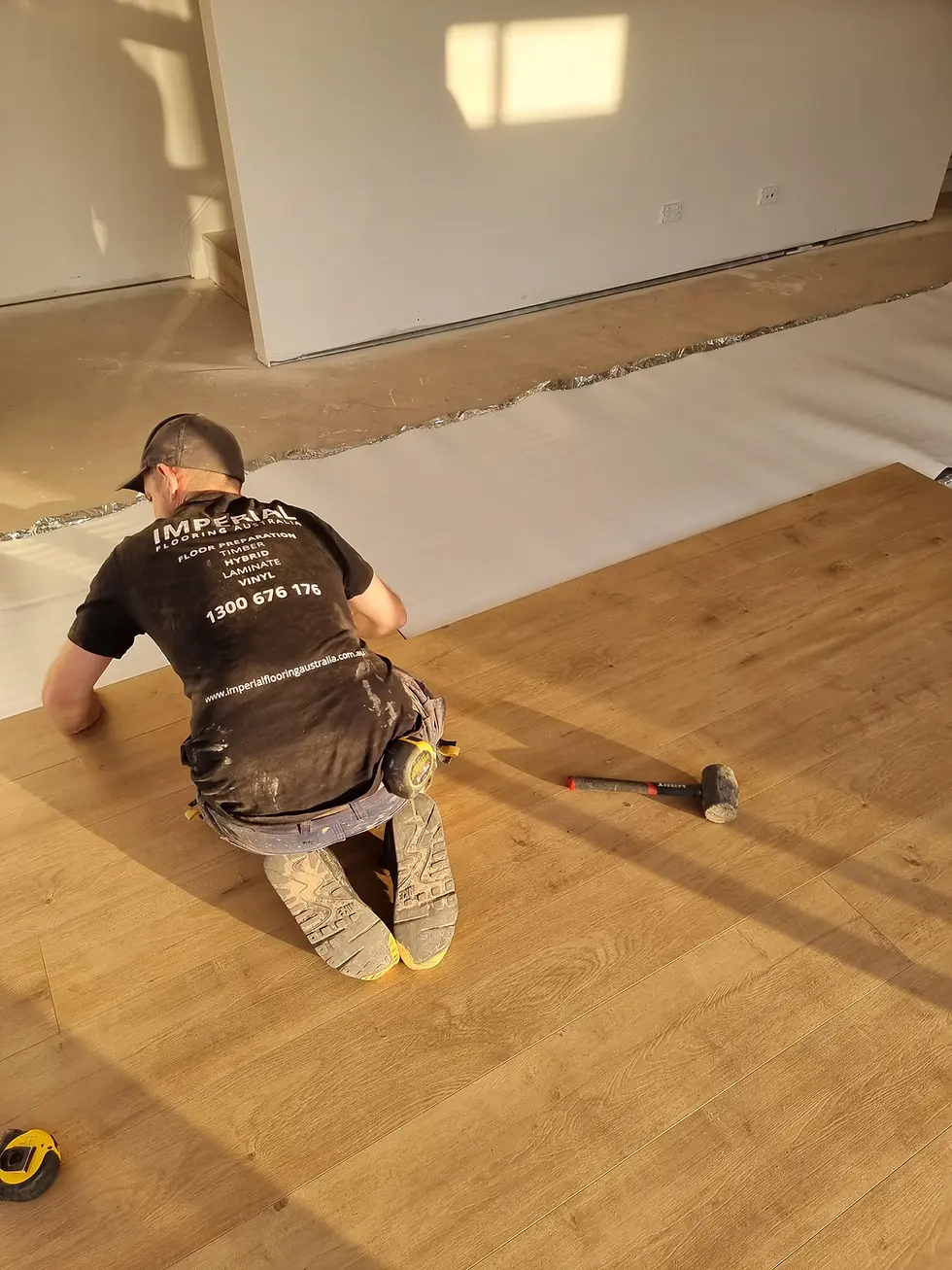
6. Flooring Installation
-
Position the first plank against spacers with the tongue facing outward.
-
Insert subsequent planks at approximately a 45° angle before lowering into position.
-
Ensure complete adhesive contact beneath every plank.
-
Maintain a random stagger pattern for a natural appearance.
Recommended minimum board length: 450mm where practical.
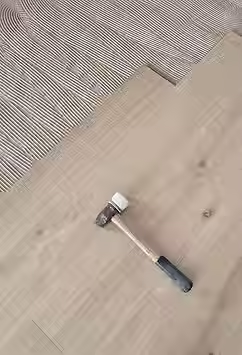
If required, use a tapping block and white rubber mallet. Never strike boards directly.
Light weights or tension straps may be used to maintain tight joints while adhesive cures.
7. Cutting & Fitting
-
Measure carefully before cutting.
-
Maintain all required expansion gaps.
-
Avoid repetitive joint alignment.
-
Ensure pattern consistency, particularly with long planks or feature grades.
8. Curing & Finishing
Allow adhesive to cure for 8–12 hours minimum, or as specified by the adhesive manufacturer, before permitting light foot traffic.
Do not install heavy furniture until full cure has been achieved.
Once cured:
-
Remove spacers.
-
Reinstall skirting boards or trims by fixing them to the wall only, never through the floor.
For final cleaning:
-
Use mineral spirits, turpentine or acetone sparingly where appropriate.
-
Do not flood the floor with water.
Minor gaps may be filled using a colour-matched filler or cork compound after testing on an offcut.
Site Floor Protection
On active construction sites, newly installed flooring must be protected immediately to prevent damage.
Use breathable floor protection systems such as THOR Floor Protection or an equivalent product that allows airflow and does not trap moisture beneath the covering.
Ongoing Maintenance
Maintain Imperial Flooring Australia® Engineered Timber Flooring using approved timber floor care systems such as BONA® Floor Care products or equivalent.
Avoid:
-
Excessive water exposure
-
Steam mopping
-
Harsh or abrasive cleaning agents
Disclaimer
Installation must be carried out in accordance with this guide and relevant Australian Standards. Imperial Flooring Australia® accepts no responsibility for failure resulting from improper installation, inadequate subfloor preparation, moisture issues, or non-compliant site conditions.
Flooring Accessories







FLOATING FLOOR INSTALLATION PROCEDURE
Imperial Flooring Australia®
Floating floor installation is a proven method for installing engineered timber flooring, offering excellent performance, efficient installation, and a clean professional finish.
This guide outlines the recommended installation procedure for Tongue & Groove (T&G) profile systems.
Note: Clip-lock engineered flooring systems do not require PVA adhesive and should be installed in accordance with the manufacturer's specific instructions.
Step 1 – Prepare the Subfloor
Correct subfloor preparation is essential for a successful installation.
Before commencing, ensure the subfloor is:
-
Structurally sound and stable
-
Clean and free from dust, dirt and construction debris
-
Dry and moisture compliant
-
Flat within Australian Standard tolerances
Do not wash or wet the subfloor prior to installation.
Flatness Requirements
The subfloor must not exceed:
-
3mm variation over a 3-metre span
Low areas should be corrected using approved floor levelling compounds, while high spots should be mechanically ground.
Moisture Protection
For ground-level concrete slabs:
-
Apply an approved painted moisture barrier, or
-
Install a suitable floating floor underlay incorporating an integrated vapour barrier.
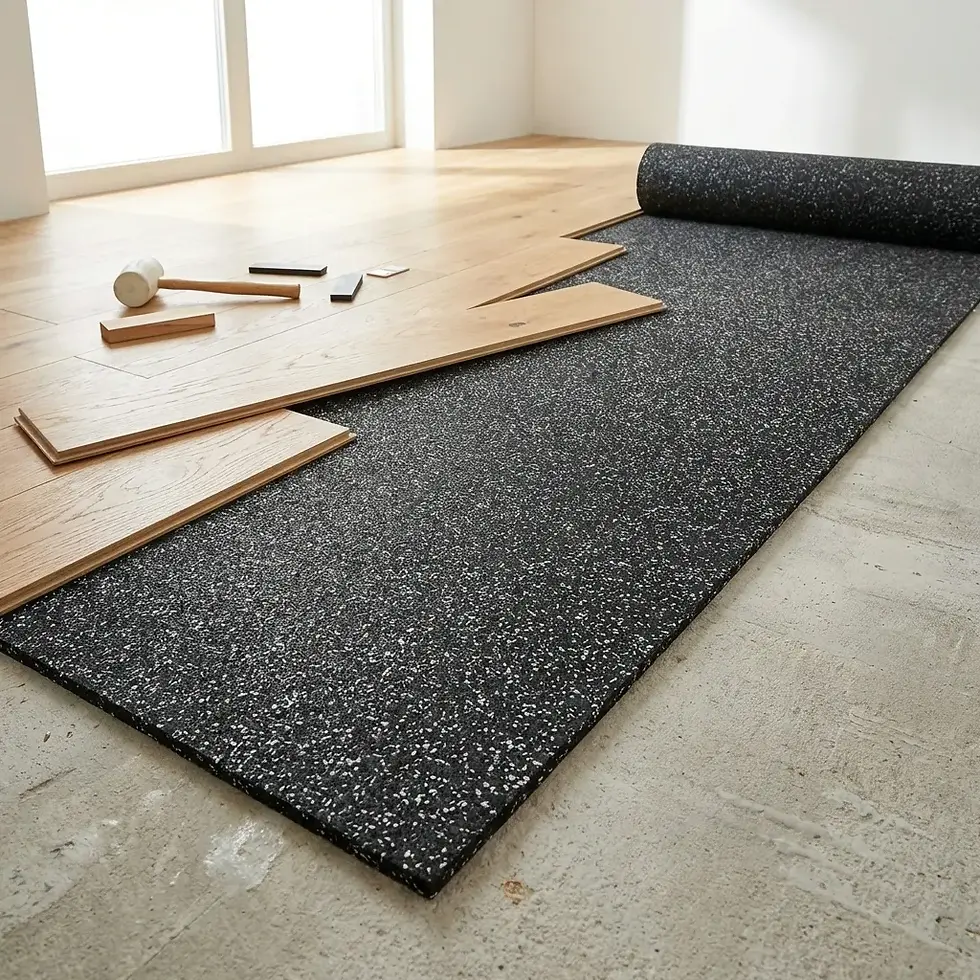
Underlay
Install the acoustic underlay across the entire floor area, ensuring joints are neatly butted together. Combination underlays incorporating vapour protection may also be used where appropriate.
Step 2 – Undercut Door Frames
For a seamless finish:
-
Place an engineered timber plank upside down against the door jamb or architrave to determine the required cutting height.
-
Undercut using a multi-tool or jamb saw.
-
Ensure flooring can slide freely beneath the frame without restriction.
Step 3 – Start the Installation & Maintain Expansion Gaps
Begin installation with the groove side facing the wall to avoid tapping against the groove profile during installation.
-
Position spacers around the perimeter.
-
Maintain a minimum 10mm expansion gap between the flooring and all walls, cabinetry and fixed vertical structures.
-
Install the first row with the tongue facing outward into the room.
Installations Exceeding 16 Metres
Where continuous floor runs exceed 16 metres, the area must be divided using an appropriate expansion trim or movement joint.
Expansion gaps and movement joints must remain unobstructed at all times.
Step 4 – Stagger the Boards
For structural integrity and an attractive appearance:
-
Begin the second row using either the offcut from the previous row, where suitable, or
-
A board with an end joint positioned at least 450mm away from the adjacent joint.
Maintain a minimum stagger of 450mm between end joints throughout the installation.
Step 5 – Apply Adhesive (Tongue & Groove Systems Only)
For Tongue & Groove engineered flooring:
-
Use cross-linked PVA wood adhesive only.
-
Do not use standard woodworking glue.
-
Apply a continuous bead of adhesive to the upper inside edge of the groove, including end joints.
Important
-
Do not spot glue individual boards.
-
Floating floors are designed to move as a single raft, and spot gluing can restrict movement, potentially resulting in peaking or joint stress.
Remove excess adhesive immediately using a clean damp cloth or suitable cleaning wipes, followed by a dry cloth.
Step 6 – Lay & Join Boards
-
Insert the tongue into the glued groove.
-
Press the board firmly into position.
-
Use a tapping block and rubber mallet where required, ensuring boards are never struck directly.
If joints do not close properly, inspect the glue application, as excessive adhesive may create hydraulic resistance.
Continue installing row by row, ensuring all joints are fully closed and aligned.
Step 7 – Install the Final Row
The final row will typically require trimming.
-
Measure the remaining gap accurately.
-
Deduct 10mm to maintain the required expansion space.
-
Exclude the tongue from measurement calculations before cutting.
Apply adhesive to the groove, install the boards, and use a pull bar or spacing bar with protective block to gently draw boards into position.
Step 8 – Finishing
After installation:
-
Allow adhesive to cure in accordance with the manufacturer's recommendations before permitting foot traffic.
-
Remove all expansion spacers once curing is complete.
-
Fill any minor visible gaps using a colour-matched timber filler or cork compound (test on an offcut first).
-
Install skirting boards or scotia mouldings by fixing them to the wall only, never through the flooring.
Important Installation Notes
-
Clip-lock systems do not require PVA adhesive. Always follow the manufacturer's installation instructions.
-
Tongue & Groove engineered flooring must have all joints glued using an approved cross-linked PVA adhesive.
-
Floating floors must remain free to expand and contract and must not be mechanically fixed to the subfloor or restricted by heavy fixed objects.
-
On active building sites, newly installed flooring should be protected immediately using a breathable floor protection system. Imperial Flooring Australia® recommends THOR Floor Protection or an equivalent product that allows airflow and prevents moisture entrapment.
Disclaimer
Installation must be carried out in accordance with this guide and relevant Australian Standards. Imperial Flooring Australia® accepts no responsibility for failure resulting from improper installation, inadequate subfloor preparation, moisture issues, or non-compliant site conditions.


